Website thumbnail dataset: 34 home pages
- WebP, median
- 12.9 KB
- JPEG, median
- 15.8 KB
- PNG, median
- 70.6 KB
The first screen of the home page of 38 open projects and non-profits, as a 400 x 320 px thumbnail. Page height, requests, load time and the bytes in three formats, in a table you can sort, copy and download.
The table
34 home pages that loaded, and 4 that did not, at the bottom. Click a heading to sort. Copy and download take the rows you see. Page height is read from scrollHeight[2], and load is the loadEventEnd of the page[1].
38 of 38 rows. Copy and download take the rows you see, in the order you see them.
 Apache Software Foundation www.apache.org | 7,390 | 54 | 1,985 ms | 67.7 KB | 16.8 KB | 13.0 KB |
 Creative Commons creativecommons.org | 6,615 | 41 | 971 ms | 83.7 KB | 16.1 KB | 13.4 KB |
 curl curl.se | 1,984 | 13 | 212 ms | 101.1 KB | 25.0 KB | 22.0 KB |
 Debian www.debian.org | 2,078 | 23 | 401 ms | 101.5 KB | 20.3 KB | 17.0 KB |
 Fedora fedoraproject.org | 4,518 | 32 | 1,148 ms | 50.7 KB | 12.1 KB | 9.9 KB |
 Free Software Foundation www.fsf.org A membership pop-up dims the page in the first screen. | 6,147 | 29 | 1,803 ms | 56.0 KB | 9.7 KB | 6.9 KB |
 GIMP www.gimp.org | 4,319 | 29 | 429 ms | 169.4 KB | 17.7 KB | 15.3 KB |
 Git git-scm.com The page is shorter than the window (957 px of content). | 1,024 | 22 | 399 ms | 86.0 KB | 11.9 KB | 9.9 KB |
 GNOME www.gnome.org | 6,597 | 41 | 1,375 ms | 89.3 KB | 13.3 KB | 10.0 KB |
 Go go.dev | 3,840 | 68 | 2,037 ms | 68.9 KB | 19.9 KB | 15.8 KB |
 Internet Archive archive.org The page was 1,024, 3,446 and 6,061 px tall on the three visits. | 3,446 | 101 | 1,203 ms | 56.6 KB | 15.8 KB | 11.0 KB |
 KDE kde.org | 8,877 | 57 | 4,071 ms | 56.6 KB | 15.8 KB | 12.7 KB |
 LibreOffice www.libreoffice.org | 6,798 | 55 | 1,291 ms | 68.4 KB | 18.3 KB | 14.6 KB |
 Linux Foundation www.linuxfoundation.org | 7,047 | 104 | 4,541 ms | 75.9 KB | 19.4 KB | 15.3 KB |
 Linux kernel www.kernel.org | 1,138 | 14 | 228 ms | 71.6 KB | 16.1 KB | 14.4 KB |
 MariaDB mariadb.org | 4,249 | 90 | 661 ms | 62.6 KB | 14.8 KB | 10.7 KB |
 Mozilla www.mozilla.org | 7,411 | 48 | 1,562 ms | 47.4 KB | 14.6 KB | 11.2 KB |
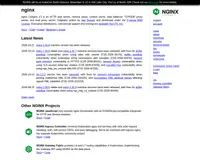 nginx nginx.org | 1,100 | 7 | 171 ms | 85.6 KB | 18.1 KB | 18.1 KB |
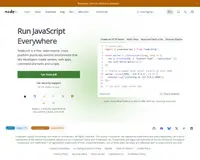 Node.js nodejs.org The page is exactly one window high. | 1,024 | 42 | 849 ms | 84.5 KB | 15.8 KB | 13.0 KB |
 OpenBSD www.openbsd.org The page is exactly one window high. | 1,024 | 4 | 4,285 ms | 81.7 KB | 16.5 KB | 15.1 KB |
 OpenSSL www.openssl.org | 1,197 | 12 | 671 ms | 45.6 KB | 12.7 KB | 10.4 KB |
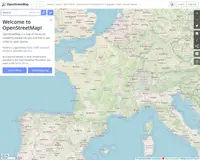 OpenStreetMap www.openstreetmap.org A map: the page is one screen and the map fills it. | 1,024 | 47 | 1,679 ms | 214.4 KB | 23.7 KB | 25.1 KB |
 PHP www.php.net | 12,849 | 28 | 2,349 ms | 75.0 KB | 14.3 KB | 13.0 KB |
 PostgreSQL www.postgresql.org | 4,067 | 21 | 1,278 ms | 123.4 KB | 22.3 KB | 22.3 KB |
 Python www.python.org | 2,605 | 29 | 1,547 ms | 69.6 KB | 17.3 KB | 11.8 KB |
 Ruby www.ruby-lang.org | 5,270 | 89 | 2,347 ms | 84.3 KB | 19.5 KB | 15.9 KB |
 Rust www.rust-lang.org | 3,490 | 23 | 1,147 ms | 60.5 KB | 14.8 KB | 12.7 KB |
 Signal signal.org | 4,568 | 18 | 236 ms | 95.6 KB | 18.6 KB | 15.6 KB |
SQLite sqlite.org The page is shorter than the window (717 px of content). No small picture: the first visit failed. | 1,024 | 8 | 1,693 ms | 55.3 KB | 13.9 KB | 11.4 KB |
 Thunderbird www.thunderbird.net | 8,407 | 49 | 2,281 ms | 60.3 KB | 10.8 KB | 8.7 KB |
 Tor Project www.torproject.org | 4,638 | 44 | 1,053 ms | 51.5 KB | 14.4 KB | 10.9 KB |
 VideoLAN www.videolan.org | 2,985 | 36 | 1,872 ms | 80.6 KB | 14.9 KB | 12.5 KB |
 Wikipedia www.wikipedia.org | 1,103 | 5 | 1,382 ms | 49.1 KB | 11.0 KB | 8.9 KB |
 WordPress wordpress.org | 5,010 | 46 | 2,366 ms | 67.7 KB | 13.4 KB | 10.9 KB |
Blender www.blender.org | Not captured: HTTP 403 on all three visits. The picture was a "verifying" check page. | |||||
Electronic Frontier Foundation www.eff.org | Not captured: HTTP 403 on all three visits. The picture was a blank page. | |||||
GNU www.gnu.org | Not captured: HTTP 429 (too many requests) on the first visit, then no answer within 75 seconds on the other two. | |||||
Inkscape inkscape.org | Not captured: No answer within 75 seconds on all three visits. | |||||
Sizes are for a thumbnail 400 px wide and 320 px high, in kilobytes of 1,000 bytes. Load is the best of three visits on a busy machine. The smallest of the three formats for each site is in blue. The CSV has 15 columns, including the same three sizes at 800 px.
What the table shows
Six things, each read from the rows above. They describe these 34 pages on one day, not the web.
WebP was the smallest file on 32 of 34 pages
At 400 x 320 px the median was 12.9 KB as WebP, 15.8 KB as JPEG and 70.6 KB as PNG. PNG ran from 4.2 to 11.1 times the WebP file, with a median of 5.47. JPEG won on 2 pages: by 1.4 KB on the OpenStreetMap map and by 5 bytes on PostgreSQL. PNG was never the smallest.
A long, busy page does not make a bigger thumbnail
Page height and file size had a rank correlation of -0.15, and request count and file size -0.05: close to none. The 16 pages with 40 or more requests had a median WebP of 12,883 bytes; the other 18 had 12,869. The thumbnail only sees the first screen, and what is on it decides its weight.
The plainest pages made some of the larger files
The curl home page (13 requests) came to 22.0 KB as WebP and the nginx one (7 requests) to 18.1 KB, against 8.9 KB for Wikipedia, which has a logo, a ring of language links and 5 requests. Small text on a white page is a lot of fine edges, and edges are what these formats spend bytes on. The largest file was the map of OpenStreetMap: 25.1 KB as WebP and 214.4 KB as PNG.
A thumbnail shows about a quarter of the page
The median page was 4,158 px tall, so a 1,024 px first screen is 25% of it. The tallest was PHP at 12,849 px, where the first screen is 8%. 12 of the 34 pages were 5,000 px or taller.
Twice the width costs about three times the bytes
At 800 x 640 px the median WebP was 38.3 KB, 3 times the 400 px file for four times the pixels. The median JPEG was 46.5 KB and the median PNG 197.8 KB. The largest 800 px WebP was 104.0 KB.
4 of 38 home pages gave no thumbnail
Two answered 403 on every visit and still produced a picture: a blank page (288 bytes as WebP) and a "verifying" check screen (about 1.7 KB). One answered 429 and then went quiet, and one never answered in 75 seconds. A thumbnail job has to look at the status before it stores the picture.[3]
Thumbnail size at other widths
Bytes, site by site
Each row is one page at 400 x 320 px, smallest WebP first. The three bars are PNG, JPEG and WebP on one scale, up to the largest PNG (214.4 KB). The gap between the grey bar and the blue one is what the format choice saves.
- PNG
- JPEG
- WebP
- Free Software Foundation6.9 KB
- Thunderbird8.7 KB
- Wikipedia8.9 KB
- Fedora9.9 KB
- Git9.9 KB
- GNOME10.0 KB
- OpenSSL10.4 KB
- MariaDB10.7 KB
- Tor Project10.9 KB
- WordPress10.9 KB
- Internet Archive11.0 KB
- Mozilla11.2 KB
- SQLite11.4 KB
- Python11.8 KB
- VideoLAN12.5 KB
- Rust12.7 KB
- KDE12.7 KB
- Node.js13.0 KB
- Apache Software Foundation13.0 KB
- PHP13.0 KB
- Creative Commons13.4 KB
- Linux kernel14.4 KB
- LibreOffice14.6 KB
- OpenBSD15.1 KB
- GIMP15.3 KB
- Linux Foundation15.3 KB
- Signal15.6 KB
- Go15.8 KB
- Ruby15.9 KB
- Debian17.0 KB
- nginx18.1 KB
- curl22.0 KB
- PostgreSQL22.3 KB
- OpenStreetMap25.1 KB
A budget, and a request
At least nine pages in ten made a WebP of 18.1 KB or less, so that is a safe planning size for one 400 px thumbnail. At the median size, a set of thumbnails weighs this much to store:
| Thumbnails | PNG | JPEG | WebP |
|---|---|---|---|
| 1,000 | 70.6 MB | 15.8 MB | 12.9 MB |
| 10,000 | 706.4 MB | 158.4 MB | 128.8 MB |
| 100,000 | 7.1 GB | 1.6 GB | 1.3 GB |
To make one of these, ask for the width and the format. The window is 1280 x 1024 unless you set it, so image_width=400 gives 400 x 320. Add image_height to crop to another shape from the top of the page.
curl "https://curlshot.com/api/v1/screenshot?access_key=YOUR_ACCESS_KEY\
&url=https%3A%2F%2Fwww.python.org%2F\
&image_width=400\
&format=webp\
&image_quality=80" \
  --output python.webp
The lab did not send this request. It ran Chromium and sharp with the renderer’s settings, as the last section says. Try one without code in the website thumbnail tool or the URL to image tool. The Free plan of CurlShot has 50 screenshots a month and needs no card, and a failed render is not counted. The plans are on the pricing page.
The columns
The CSV and the JSON use these 15 names. Empty cells are rows that were not captured.
| Column | Meaning | How it was measured |
|---|---|---|
| site | Name of the project or organisation. | Chosen by hand from open projects and non-profit organisations. |
| url | The address that was opened. | The home page, as listed. Redirects were followed. |
| captured | yes, or no when two of three visits failed. | A visit counts when the main document answered 200 and the picture was taken. |
| problem | Why a row has no numbers. | The HTTP status or the browser error of the visits that failed. |
| note | Something to know about the row. | Written after looking at the picture and the page. |
| page_height_px | Height of the whole page in CSS pixels. | The larger of the document and body scroll height after load. A page is never reported shorter than the window. |
| requests | Requests the page made. | Every request event from the start of the visit to two seconds after the load event; data and blob addresses not counted. |
| load_ms_best | Time to the load event, best of three visits. | loadEventEnd from the navigation timing entry. The best of three, because a busy machine only ever adds time. |
| load_ms_worst | The slowest of the three visits. | Same measure; the gap to the best shows how much the numbers moved. |
| png_400 | Bytes of the first screen as PNG at 400 x 320. | Screenshot of the window, resized to 400 px wide, then encoded. Median of the visits. |
| jpeg_400 | Bytes as JPEG at 400 x 320. | Quality 80, mozjpeg, white background. |
| webp_400 | Bytes as WebP at 400 x 320. | Quality 80. |
| png_800 | Bytes as PNG at 800 x 640. | As above, for screens that show the thumbnail at twice the density. |
| jpeg_800 | Bytes as JPEG at 800 x 640. | As above. |
| webp_800 | Bytes as WebP at 800 x 640. | As above. |
How it was run
One run on 12 November 2026, from one server in France, with Playwright 1.63 (Chromium headless shell) and sharp 0.35. For each of 38 home pages the lab opened a fresh browser context at 1280 x 1024 (a desktop window, pixel density 1), waited for the load event and 2 more seconds, read the page height and the number of requests, took a picture of the window (the first screen, not the whole page), resized it to 400 and 800 px wide and encoded each size as PNG, JPEG and WebP. JPEG used quality 80 with mozjpeg and WebP quality 80, the settings of the renderer's thumbnail path. Every site was visited 3 times, in 3 passes over the whole list, one site at a time with 2.5 seconds between visits, at nice 15, and the table shows the median of the visits that worked, except load time, which is the best of the visits. A kilobyte is 1,000 bytes.
Two and a half seconds between visits, one site at a time, so no site saw more than one visit about every four minutes.
Between visits the numbers were steady: of the 34 captured pages, 1 changed in height by more than 5 percent, 2 in WebP bytes and 2 in requests by more than 10 percent. The home page of the Internet Archive was 1,024, 3,446 and 6,061 px tall on the three visits.
What the run does not cover
- One run, one day, one place. 38 home pages chosen by hand from open projects and non-profit organisations are not "the web". Home pages change, and the next run will differ.
- The load time was measured on a shared machine that was busy: the one-minute load average at the start of a visit had a median of 10.9 on 6 cores, from 4.3 to 34.4. A busy machine only makes a page slower, so the table gives the best of three visits, and the ranking of the sites by load time is weak evidence. The bytes, the requests and the heights do not depend on the speed of the machine.
- The lab used the headless shell build of Chromium with Playwright's default user agent. The renderer of the product uses full Chromium and a desktop Chrome user agent. The four sites that gave nothing also gave nothing to the second setup (one visit each with full Chromium and a desktop Chrome user agent: eff.org still refused (an HTTP error), blender.org still answered 403, and gnu.org and inkscape.org still gave no answer in 75 seconds), but a different network or a different day can give a different answer.
- The lab did not call the screenshot API. It followed the renderer's resize and encoding settings, so the sizes should be close, but a request to the API is the real measure for your own pages.
- Cookie banners, pop-ups and ads were not blocked, so what you see is what a first-time visitor sees. One site (the Free Software Foundation) had a pop-up dimming its first screen, and its small file is partly the dim.
- Pages that are shorter than the window, or fill it, show a height of 1,024 px: the number is never smaller than the window. 5 of the 34 captured pages show it. The map of OpenStreetMap is one of them, because the map is an app and not a document.
The pictures in the table are 33 first screens reduced to 200 px wide, from the first visit; the pages and what is on them belong to their owners. The numbers are from this run and may be copied and quoted.
Questions people ask
How many kilobytes is a website thumbnail?
At 400 x 320 px, the first screen of 34 open-project home pages came to a median of 12.9 KB as WebP, 15.8 KB as JPEG and 70.6 KB as PNG, on 12 November 2026. The largest WebP was 25.1 KB. At 800 x 640 px the median WebP was 38.3 KB.
Which format is best for website thumbnails?
In this run WebP was the smallest on 32 of 34 pages, about 1.22 times smaller than JPEG at the same quality setting, and 5.47 times smaller than PNG. JPEG won on 2 pages, by a wide margin only on a map.
Does a longer page make a bigger thumbnail?
No. A thumbnail is the first screen, so what is on that screen sets the size. Page height and file size had a rank correlation of -0.15 in this run.
How long does it take to load a home page for a thumbnail?
The best of three visits to the load event had a median of 1,333 ms, from 171 ms to 4,541 ms, on a shared and busy machine. It is the page load only: the time of a CurlShot request was not measured.
Why did some home pages give no thumbnail?
4 of 38 gave nothing: two answered 403 on every visit, one answered 429 and then did not answer, and one did not answer within 75 seconds. A job that makes thumbnails should check the status and keep going.
Sources
- [1]MDN Web Docs, PerformanceNavigationTiming: loadEventEnd property. Checked .
- [2]MDN Web Docs, Element: scrollHeight property. Checked .
- [3]MDN Web Docs, 429 Too Many Requests. Checked .
Read next
- Cheat sheetWebsite thumbnail sizes: how small can it getThumbnail sizes for link lists, cards and previews, the viewport to capture from, 2x files for sharp screens, and the width where text stops being readable.
- ComparisonPNG, JPEG, WebP or PDF for website screenshotsA decision flow, a comparison table and our own file-size measurements for choosing PNG, JPEG, WebP or PDF when you save a screenshot of a web page.
- Cheat sheetViewport sizes cheat sheet: phones to desktopsViewport sizes in CSS pixels, screenshot sizes and device pixel ratios of iPhone, Pixel, Galaxy, iPad and laptop screens, drawn to scale, and the sizes to test.